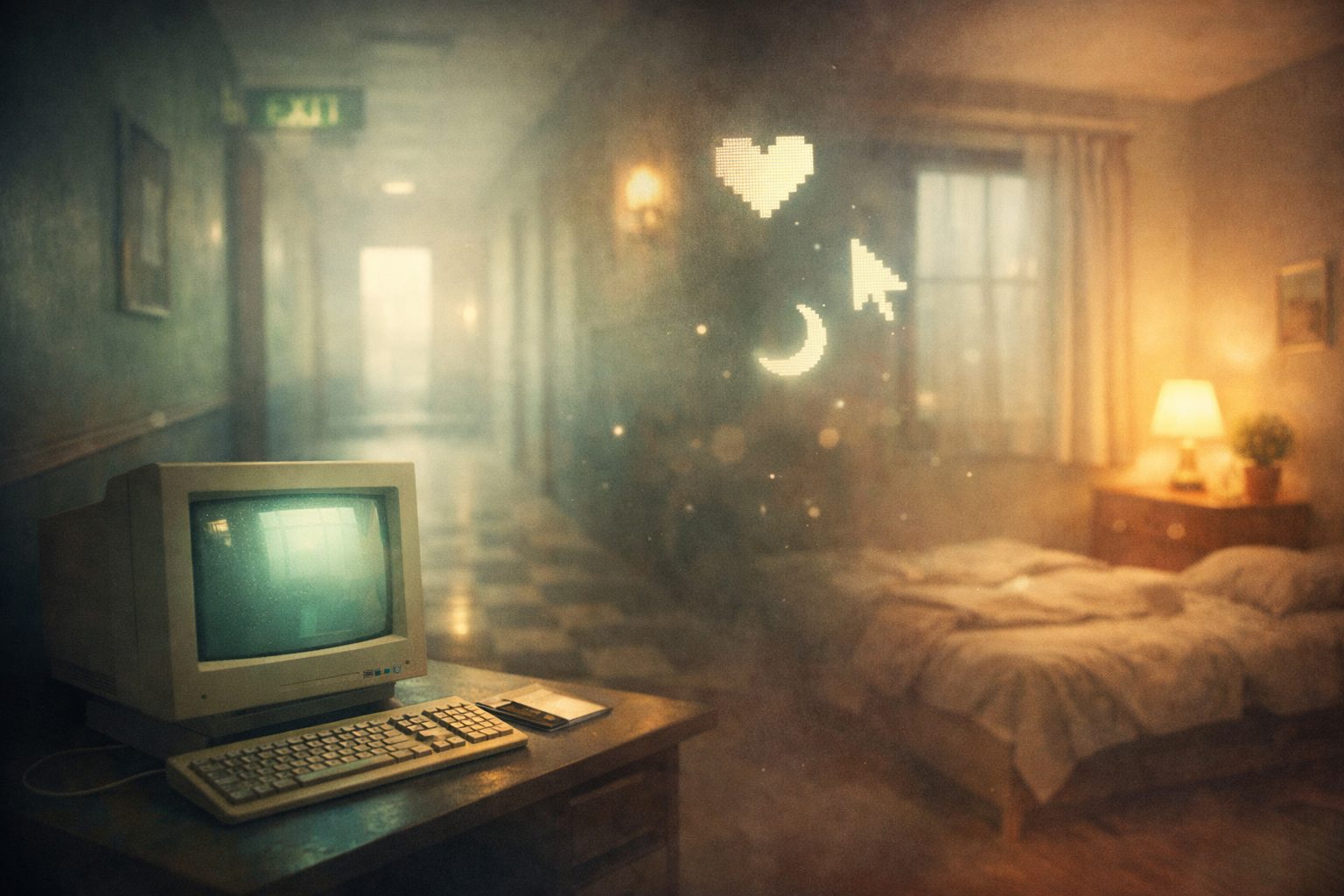
Internet aesthetics often provoke strong emotions.
Nostalgia.
Comfort.
Unease.
Longing.
Sometimes without context.
Sometimes without explanation.
You might not even like the image — and still feel something.
Why do internet aesthetics feel so emotional?
- Because They Bypass Logic
- Because They Use Familiar Emotional Shortcuts
- Emotion Without Personal Memory
- Because Context Is Removed
- Emotional Ambiguity Holds Attention
- Why These Feelings Spread So Easily
- Algorithms Amplify Emotional Continuity
- Why Emotional Doesn’t Mean Personal
- When Emotion Replaces Narrative
- Why This Matters
- Looking Deeper
- In Short
Because They Bypass Logic

Internet aesthetics rarely ask to be understood.
They don’t explain themselves.
They don’t provide narrative.
They don’t require interpretation.
Instead, they work on mood.
When logic is bypassed, emotional response arrives faster — and often more intensely.
You don’t think first.
You feel first.
Because They Use Familiar Emotional Shortcuts
Many internet aesthetics rely on shared emotional references:
- childhood spaces
- early digital interfaces
- quiet interiors
- soft colors
- empty environments
These aren’t neutral visuals.
They are shortcuts to memory, routine, and emotional states you’ve experienced before — often unconsciously.
The image doesn’t explain the feeling.
It activates it.
Emotion Without Personal Memory

What’s striking is that these emotions often aren’t tied to specific memories.
You may feel nostalgic without recalling anything concrete.
Comforted without knowing why.
Uneasy without danger.
This happens because internet aesthetics trigger emotional patterns, not personal stories.
The feeling comes first.
Meaning may never arrive.
Because Context Is Removed

Online, images are detached from origin.
You don’t know:
- who created them
- why they exist
- what came before or after
Without context, the mind fills the gap with emotion.
Emotion becomes the primary way to relate to the image.
This makes the response feel intimate — even when it’s not personal.
Emotional Ambiguity Holds Attention

Clear emotions resolve quickly.
Ambiguous emotions linger.
Internet aesthetics often sit in between:
- comforting but empty
- familiar but distant
- calm but unsettling
This ambiguity keeps the image alive in the mind.
You’re not sure how to feel — so you keep feeling.
Why These Feelings Spread So Easily

Emotion travels faster than explanation.
An image that feels something can be shared without understanding.
No caption needed.
No agreement required.
Others may feel something different — but still feel something.
That shared emotional openness makes internet aesthetics highly spreadable.
Algorithms Amplify Emotional Continuity

Platforms don’t understand meaning.
They track reaction.
If you linger on a certain mood — soft, uncanny, nostalgic — the system delivers more of it.
Over time, aesthetics stop feeling like isolated images and start feeling like emotional environments.
You’re no longer reacting to one image.
You’re living inside a mood.
Why Emotional Doesn’t Mean Personal
Internet aesthetics can feel deeply personal — but they are rarely private.
Thousands of people may respond to the same image in similar ways.
This creates a strange tension:
- the feeling feels intimate
- the experience is shared
That contradiction is part of their emotional power.
When Emotion Replaces Narrative
Traditionally, images told stories.
Internet aesthetics often don’t.
They replace story with atmosphere.
You don’t ask “what happens?”
You ask “how does this feel?”
Emotion becomes the content.
Why This Matters

When emotion becomes detached from context, it becomes easier to enter — and harder to leave.
You don’t need to understand.
You don’t need to remember.
You just remain inside the feeling.
This is comforting for some — and unsettling for others.
Looking Deeper

This article explains why internet aesthetics feel emotional.
But it doesn’t fully explain how these emotional states are sustained, repeated, and normalized online.
That deeper structure connects to ideas like Dream Logic and Algorithmic Attention — where emotion becomes a continuous background rather than a momentary response.
Those ideas are explored elsewhere on this site.
In Short

Internet aesthetics feel emotional because:
- they bypass logic
- activate shared emotional patterns
- remove context
- rely on ambiguity
- are reinforced by repetition
They don’t explain themselves.
They don’t need to.
They simply create a feeling — and let it continue.


Comment