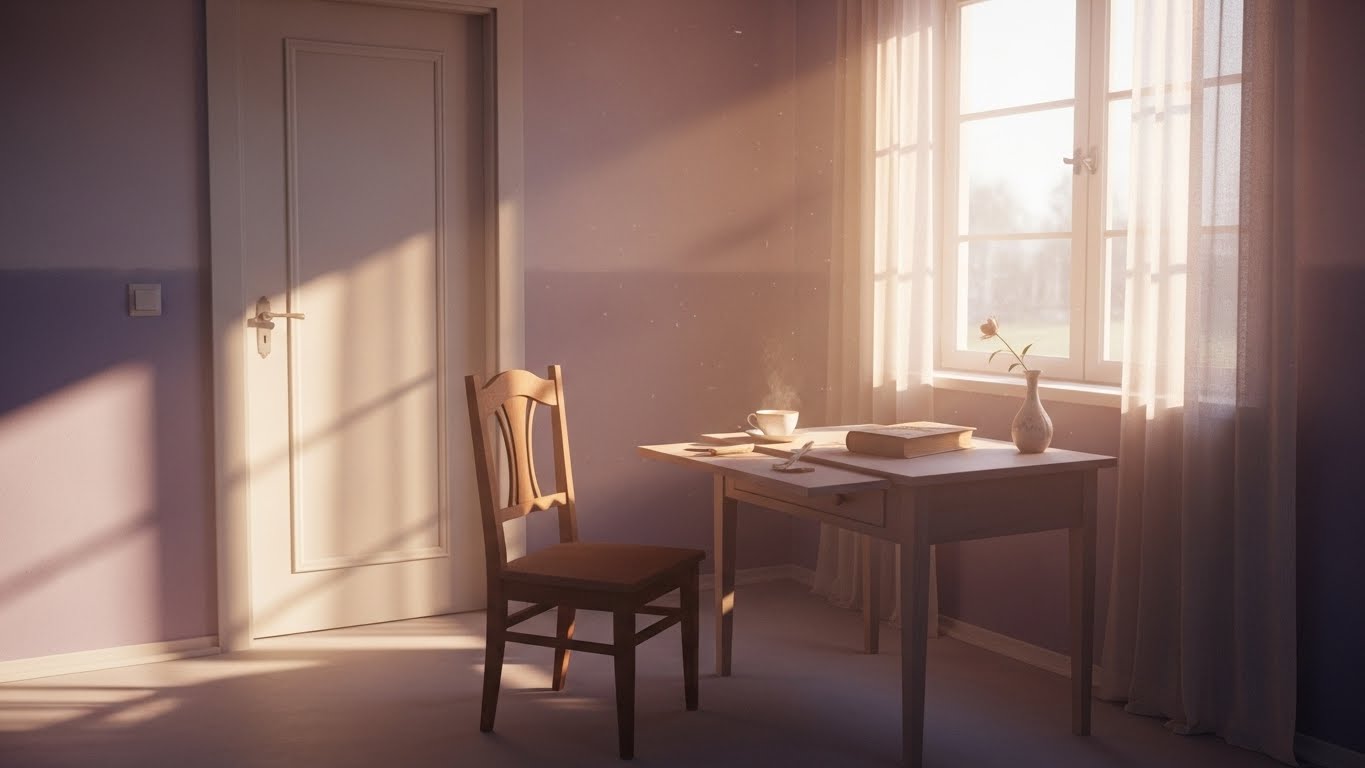
There was no clear announcement when the internet stopped behaving like a destination and started functioning more like an atmosphere.
Yet many long-time users can recognize the shift in retrospect. The change was gradual, almost imperceptible — not technological at first, but psychological.
Interfaces became environments. Feeds began to feel spatial. Time online started to accumulate as lived experience rather than discrete sessions.
Dreamcore appears within this transition. It is often labeled as an aesthetic, but that description only captures its surface.
More accurately, Dreamcore reflects a perceptual adjustment: the mind learning to inhabit spaces that are visually present yet materially absent.
Across online communities where the term circulates — from Tumblr archives to Reddit threads analyzing obscure visual trends — the same observation repeats in different language.
People do not merely look at Dreamcore images. They describe recognizing them. The reaction is closer to memory than to aesthetic appreciation.
This distinction is crucial.
- The Internet as a Soft Environment
- Recognition Without Narrative
- Softness, Memory, and the Architecture of Digital Nostalgia
- Why Dreamcore Feels Comforting and Unsettling Simultaneously
- The Pandemic Didn’t Create Dreamcore — It Revealed It
- From Visual Style to Digital Sensibility
- Conclusion — The Internet as a Dreaming Environment
The Internet as a Soft Environment
Digital environments were once framed as tools: functional, instrumental, external. Over time, however, their role expanded.
Continuous connectivity altered how users relate to mediated space. The internet became less something to access and more something to exist within.
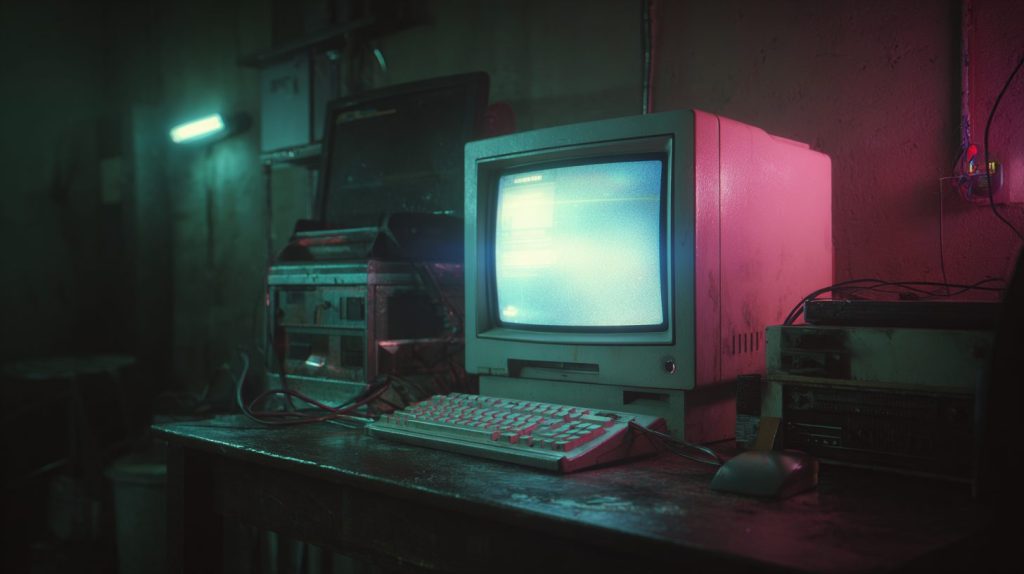
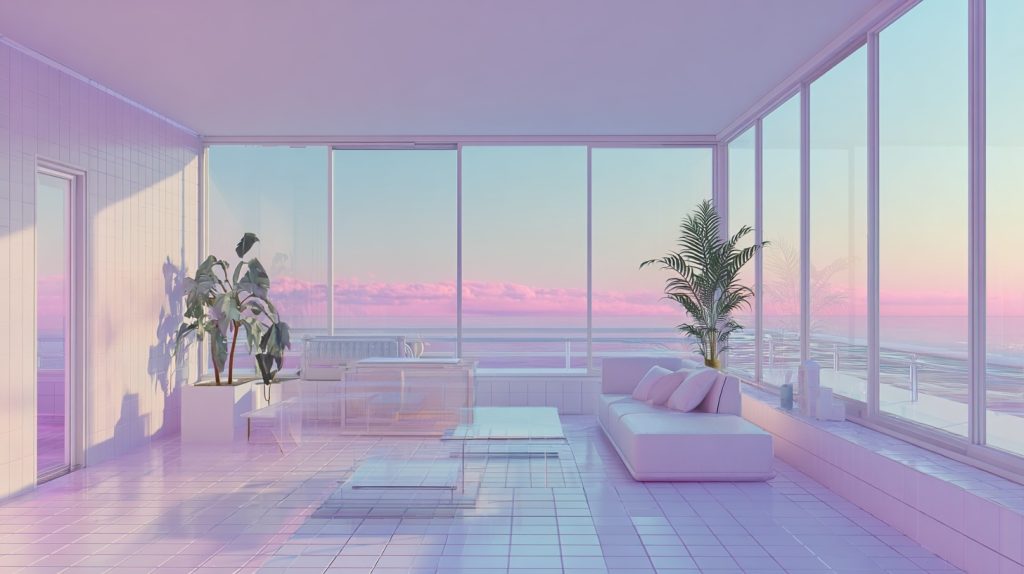
Dreamcore imagery reflects this experiential shift. Common motifs include empty transitional locations, softened architectural forms, and subdued color palettes that resemble the imperfect clarity of recollection.
These spaces rarely depict the extraordinary. Instead, they render the ordinary with subtle emotional distortion.
What emerges is not surrealism in the traditional sense, but a quieter destabilization — the sensation that familiar places have been gently detached from physical certainty.
Observers of aesthetic micro-communities often note how Dreamcore visuals circulate alongside discussions about digital fatigue, nostalgia, and perceptual drift.
The aesthetic functions as a shared vocabulary for articulating these diffuse experiences.
Recognition Without Narrative

Unlike visual movements grounded in explicit symbolism, Dreamcore operates through recognition without explanation.
Images are rarely accompanied by coherent stories. When text appears, it tends to be fragmentary or suggestive, reinforcing emotional ambiguity rather than clarifying meaning.
This pattern mirrors how memory reconstruction works.
Cognitive research on dream recall indicates that the mind often retrieves spatial fragments before narrative coherence forms.
Dreamcore seems to simulate this pre-narrative stage visually.
Within online discourse, users frequently describe encountering Dreamcore images that feel personally significant despite lacking identifiable context.
The phenomenon suggests that emotional resonance can emerge from structural familiarity alone — a hallway resembling many hallways, a sky resembling many evenings.
In this way, Dreamcore shifts emphasis from representation to atmosphere.
Softness, Memory, and the Architecture of Digital Nostalgia

A defining feature of Dreamcore is its capacity to evoke nostalgia without referencing specific historical periods.
Instead of recalling particular decades, it activates what might be described as structural nostalgia — memories tied to spatial and emotional experiences rather than cultural artifacts.
Images frequently depict environments associated with formative stages of perception: classrooms, playgrounds, corridors, domestic interiors.
These spaces are rendered with softened edges and muted tones, simulating the imperfect clarity of early memory.
In algorithmically mediated spaces, such imagery gains additional significance. Repetition amplifies emotional resonance.
As users encounter similar visual motifs across platforms, personal memory blends with collectively circulated atmosphere.
Nostalgia becomes networked, shaped as much by digital exposure as by individual experience.
Dreamcore visualizes this convergence between memory architecture and platform logic.
Why Dreamcore Feels Comforting and Unsettling Simultaneously

One of the most frequently reported responses to Dreamcore imagery is a simultaneous sense of calm and unease.
This emotional duality reflects underlying cognitive processes associated with dream recall and spatial memory reconstruction.
Comfort arises from familiarity. The environments depicted often resemble places encoded during early developmental stages.
Unease emerges from subtle inconsistencies — unnatural lighting, ambiguous spatial orientation, or the absence of human presence.
This combination produces what might be described as “safe dissonance.” The viewer experiences psychological tension without explicit threat.
Such experiences can be understood as adaptive responses to contemporary digital conditions, where individuals navigate environments that are perceptually immersive yet physically intangible.
Dreamcore transforms this abstract psychological state into a shareable visual language.
You’re allowed to just be there.
The Pandemic Didn’t Create Dreamcore — It Revealed It
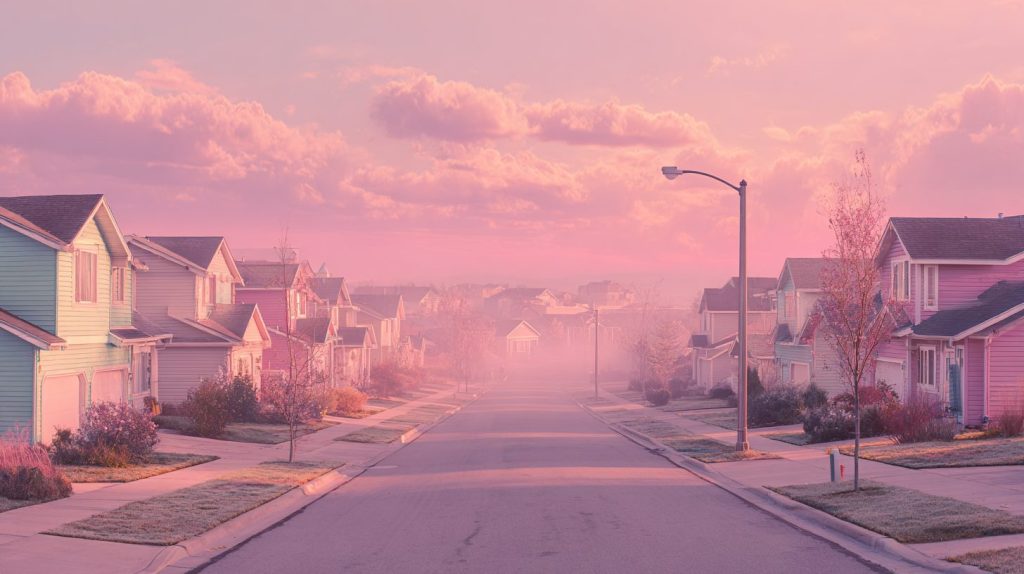
While Dreamcore gained visibility during periods of global social disruption, its underlying dynamics predate these events.
What changed was the intensity of digital immersion. As physical mobility decreased, online environments assumed greater emotional significance.
Increased screen time altered temporal perception. Days blurred together, spatial routines became repetitive, and digital interaction replaced many forms of embodied social experience.
Under these conditions, imagery that reflected psychological ambiguity resonated more strongly.
Dreamcore did not emerge suddenly. It became legible. Cultural shifts accelerated processes already underway, highlighting how deeply mediated environments had begun to shape perception.
This reframing underscores Dreamcore’s role as an interpretive lens rather than a reactive trend.
From Visual Style to Digital Sensibility
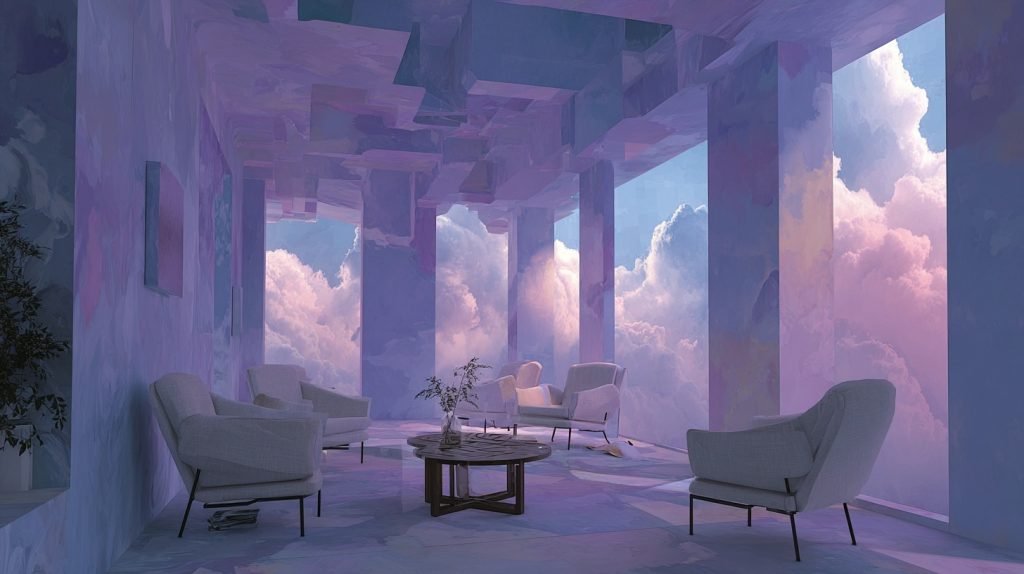
The trajectory of internet aesthetics suggests a movement from spectacle toward introspection.
Earlier visual cultures emphasized novelty, technological excess, or ironic nostalgia. Dreamcore signals a quieter phase — one focused on emotional processing and perceptual nuance.
As mediated environments continue to integrate into everyday life, aesthetic expression increasingly functions as a means of articulating internal states shaped by digital experience.
Dreamcore exemplifies this transition. It translates the diffuse atmosphere of continuous connectivity into visual form.
Such developments point toward the emergence of a broader digital sensibility, characterized by heightened awareness of how technology reshapes memory, space, and identity.
Dreamcore may be one of its earliest recognizable manifestations.
Conclusion — The Internet as a Dreaming Environment
To interpret Dreamcore solely as a stylistic movement is to overlook its deeper cultural significance.
It reflects a collective adjustment to living within environments that are simultaneously real, virtual, and psychologically mediated.
As the boundaries between physical presence and digital engagement continue to blur, experiences once associated with dreams — temporal distortion, spatial ambiguity, emotional simultaneity — increasingly define everyday perception.
Dreamcore does not invent these sensations. It gives them form.
In doing so, it offers a framework for understanding how contemporary consciousness adapts to persistent virtuality.
The internet no longer simply connects people or distributes information. It shapes how reality itself is felt.
And sometimes, that reality feels soft. Unreal. Almost like a dream.


Comment