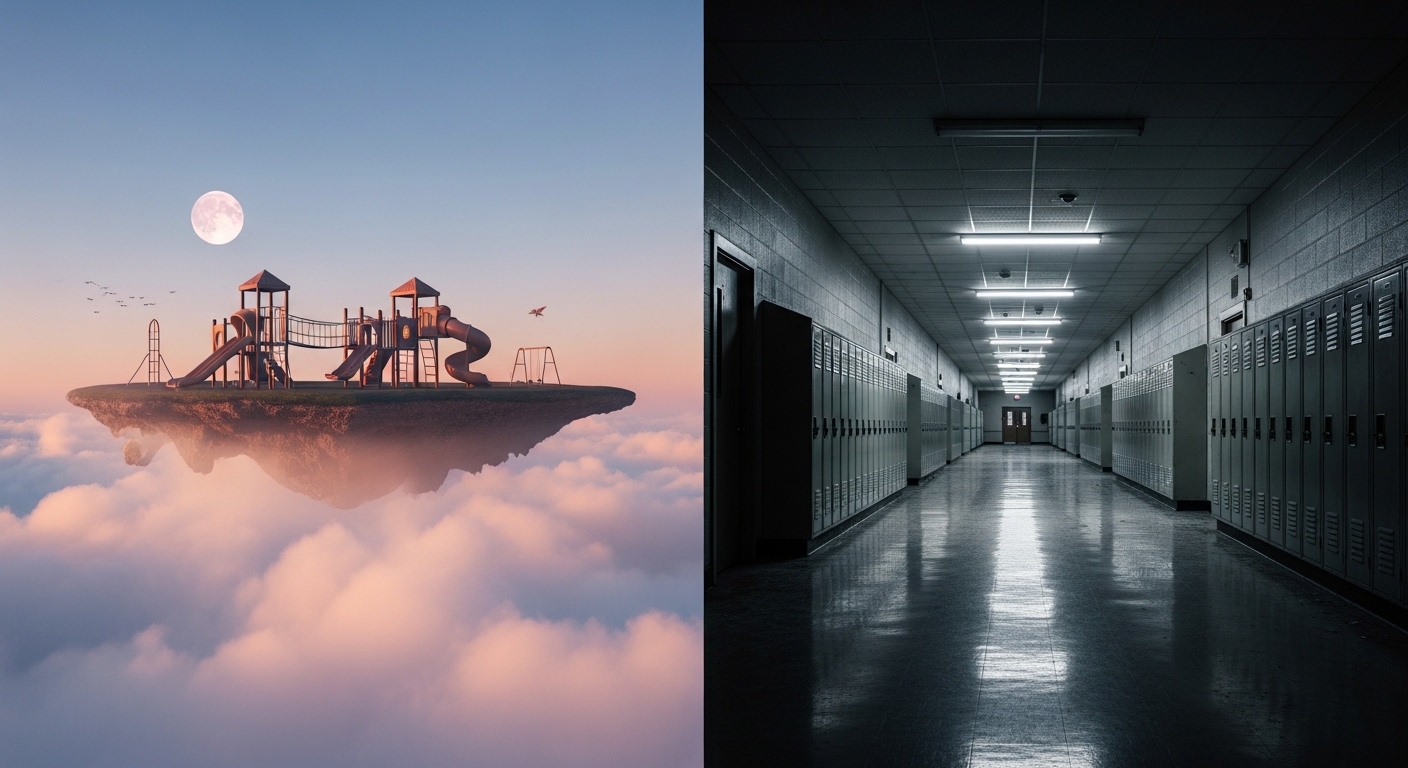
If you have ever wondered whether an image is dreamcore or a liminal space, you are not alone. These two aesthetics are often confused because both can feel nostalgic, eerie, and unsettling.
However, they are not the same. In this guide, we will explain the key differences between dreamcore and liminal space, where they overlap, and how to tell them apart.
What Is Dreamcore?

Dreamcore is an internet aesthetic that focuses on imagery that feels like a dream, a distant memory, or something emotionally surreal.
It often includes strange visuals, nostalgic elements, distorted text, unusual lighting, and an overall sense of unreality.
What makes dreamcore distinctive is its emotional atmosphere. Instead of showing a realistic place, dreamcore often creates a mood that feels symbolic, surreal, and slightly unsettling.
Some dreamcore images feel childlike or comforting at first, but then become eerie the longer you look at them.
Common dreamcore elements include:
- surreal imagery
- nostalgic childhood references
- strange captions or text overlays
- unrealistic colors or blur
- symbolic or emotionally charged objects
- a dreamlike, uncanny mood
What Is a Liminal Space?

A liminal space is a place that feels transitional or in-between.
These spaces are often empty, quiet, and strangely familiar. Common examples include empty hallways, school corridors, hotel lobbies, stairwells, parking garages, malls, and waiting rooms.
The unsettling feeling of a liminal space comes from the fact that it looks like a place people should normally pass through, use, or occupy—but no one is there.
The result is a sense of pause, emptiness, and disconnection from normal life.
Typical liminal space traits include:
- empty transitional places
- artificial lighting
- silence or implied silence
- a familiar but uncomfortable feeling
- spaces meant for passing through, not staying
- a frozen, out-of-time atmosphere
Dreamcore vs. Liminal Space: The Main Difference

The main difference between dreamcore and liminal space is simple:
Liminal space focuses on place, while dreamcore focuses on feeling.
A liminal space image is usually centered on an empty, in-between environment.
A dreamcore image is usually centered on a surreal, dreamlike emotional effect.
Another way to put it is this:
- Liminal space = an eerie location
- Dreamcore = an eerie dreamlike mood
This is why the two aesthetics overlap so often.
A single image can have both an empty transitional setting and a surreal emotional tone.
However, they are still not identical.
Dreamcore vs. Liminal Space: Key Differences

Here are the clearest differences between the two aesthetics.
1. Setting vs. Atmosphere
Liminal space is more rooted in a physical setting, such as a hallway, mall, office, or stairwell.
Dreamcore is more rooted in atmosphere, symbolism, and emotional distortion.
2. Realism vs. Dream Logic
Liminal space images are often realistic or nearly realistic. They may look like ordinary places, just empty and uncanny.
Dreamcore images often feel less realistic. They may include strange captions, impossible details, unusual colors, or surreal compositions.
3. Emptiness vs. Surreal Emotion
In liminal space, the discomfort usually comes from emptiness and transition.
In dreamcore, the discomfort usually comes from dream logic, nostalgia, and emotional unreality.
4. Architecture vs. Symbolism
Liminal space often depends on architecture and environment.
Dreamcore often depends on symbolism, mood, memory, and distorted meaning.
How Dreamcore and Liminal Space Overlap

Dreamcore and liminal space overlap because both aesthetics make familiar things feel strange.
Both can create nostalgia, unease, loneliness, and a sense that something is slightly off.
For example, an empty school hallway may feel like a liminal space because it is quiet, transitional, and abandoned-looking.
But if the same image includes distorted text, surreal lighting, or an emotionally dreamlike tone, it may also feel like dreamcore.
So while dreamcore and liminal space are different, they often exist in the same visual and emotional territory.
How to Tell Them Apart

If you are trying to identify whether an image is dreamcore or liminal space, use this quick rule:
It is probably liminal space if:
- the place looks real or mostly real
- the setting feels transitional
- the emptiness is the main source of discomfort
- the image feels architectural first
It is probably dreamcore if:
- the image feels surreal or symbolic
- emotion matters more than location
- the image feels like a dream or memory
- strange text or visual distortion is part of the effect
It may be both if:
- the image shows an empty in-between place
- it also feels surreal, nostalgic, or emotionally distorted
Dreamcore vs. Liminal Space Examples

Here are a few easy examples.
Empty School Hallway
An empty school hallway with dim lighting and no people is usually a liminal space.
Playground With Strange Text
A playground image with eerie captions, odd colors, and a dreamlike mood is more likely dreamcore.
Empty Mall With Surreal Editing
An empty mall can be liminal space, but if the image is edited to feel more dreamlike and symbolic, it may also be dreamcore.
Why Do They Feel So Unsettling?

Both dreamcore and liminal space feel unsettling because they distort familiarity.
They show places, objects, or moods that seem recognizable, but something about them feels wrong, empty, or emotionally distant.
That combination of familiarity and discomfort is what makes both aesthetics so memorable.
They tap into nostalgia, uncertainty, and the strange feeling of remembering something that may not have happened exactly the way you think.
Final Thoughts

When comparing dreamcore vs. liminal space, the easiest way to understand the difference is this:
Liminal space is about an eerie in-between place.
Dreamcore is about an eerie dreamlike feeling.
They overlap, and that is why people confuse them so often. But once you focus on whether the image is driven more by setting or by surreal emotion, the difference becomes much easier to see.
FAQ
- QIs dreamcore the same as liminal space?
- A
No. Dreamcore and liminal space overlap, but they are not the same. Liminal space is focused on transitional places, while dreamcore is focused on dreamlike and surreal emotional atmosphere.
- QIs dreamcore a type of liminal space?
- A
Not exactly. Some people see dreamcore as related to liminal space, but it is better understood as a separate aesthetic with some overlap.
- QCan an image be both dreamcore and liminal space?
- A
Yes. Some images combine an empty transitional setting with a surreal, dreamlike mood, which makes them feel like both.
- QWhy are dreamcore and liminal space so popular?
- A
Both aesthetics create a strong emotional reaction by mixing nostalgia, familiarity, and discomfort. That combination makes them highly memorable and easy to share online.


Comment