
You see an image with no explanation.
No caption.
No source.
No story.
And yet, you stop scrolling.
You don’t know where it came from — but you feel something.
Why do we like images without context?
- Because Context Slows Emotional Response
- Because Ambiguity Gives You Control
- Because Emotion Becomes the Organizing Principle
- Because Familiarity Doesn’t Need Explanation
- Because Explanation Can Break the Mood
- Because We Encounter Them in Vulnerable Moments
- Because the Internet Encourages Detachment
- Because Meaning Feels Optional
- When Contextlessness Becomes the Point
- Why This Feels Intimate — But Isn’t
- How This Connects to Dream Logic
- Looking Ahead
- In Short
Because Context Slows Emotional Response

Context requires work.
You have to read.
Interpret.
Understand.
Images without context skip all of that.
They don’t wait for comprehension.
They invite immediate feeling.
Before your mind asks questions, your emotional response has already arrived.
That speed is appealing.
Because Ambiguity Gives You Control

When an image explains itself, your role is passive.
When it doesn’t, you participate.
You decide:
- what it means
- how it feels
- why it matters
Images without context leave space.
That openness makes the experience feel personal — even if the image itself isn’t.
Because Emotion Becomes the Organizing Principle

Without context, emotion becomes the only guide.
You may not know:
- who took the photo
- when it was made
- what it represents
But you know whether it feels calm, unsettling, familiar, or distant.
Feeling replaces explanation.
And feeling is easier to navigate than information.
Because Familiarity Doesn’t Need Explanation
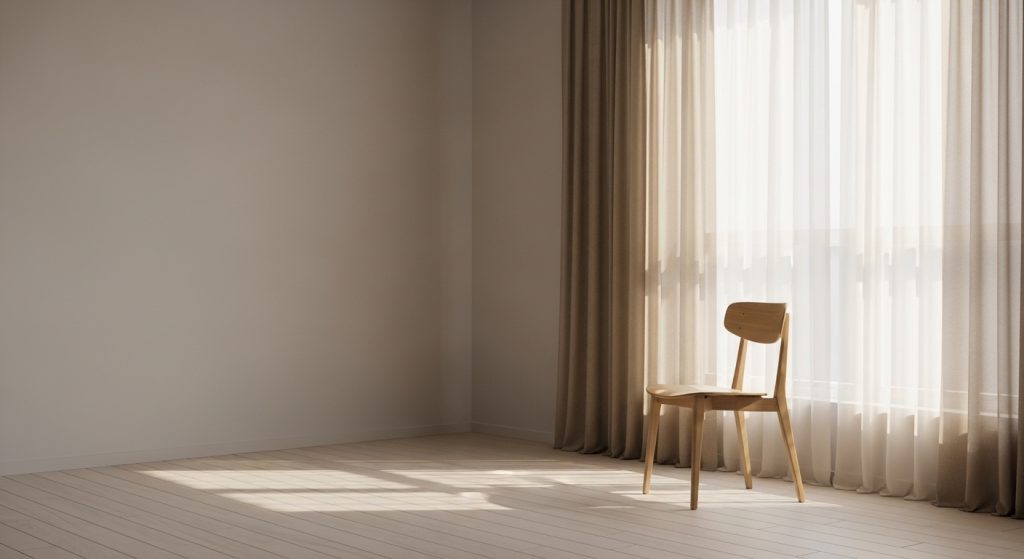
Many contextless images rely on shared visual language:
- empty rooms
- quiet spaces
- ordinary objects
- soft lighting
You’ve seen these things before.
They don’t need introduction.
Recognition happens instantly — and recognition feels reassuring.
Because Explanation Can Break the Mood

Sometimes, explanation feels intrusive.
A caption can limit interpretation.
A backstory can flatten emotion.
A label can end curiosity.
Images without context preserve mood.
They allow feeling to remain unresolved — and unresolved feelings linger longer.
Because We Encounter Them in Vulnerable Moments

Images without context often appear when we are:
- tired
- distracted
- emotionally open
- scrolling without intention
In these moments, we are less analytical and more receptive.
We don’t want to process information.
We want to feel something quietly.
Contextless images meet that need.
Because the Internet Encourages Detachment

Online, images are constantly separated from origin.
They are reposted, cropped, remixed, and circulated without attribution.
Over time, this detachment feels normal.
We learn to respond to images without asking where they came from.
The lack of context stops feeling like absence — it becomes expectation.
Because Meaning Feels Optional

In traditional media, meaning was central.
Online, meaning is negotiable.
You don’t need to agree on what an image represents.
You don’t even need to understand it.
You just need to stay with it for a moment.
That low requirement makes contextless images easy to engage with — and easy to share.
When Contextlessness Becomes the Point

Some images are powerful because they lack explanation.
They aren’t unfinished.
They aren’t missing information.
The absence is the structure.
This is especially true in internet aesthetics, where mood often matters more than message.
Why This Feels Intimate — But Isn’t

Images without context can feel personal.
You project your own feelings onto them.
They seem to respond to your state of mind.
But this intimacy is shared.
Thousands of people may have the same reaction — independently.
The experience feels private, but it isn’t unique.
How This Connects to Dream Logic

Dreams rarely explain themselves.
They present images, feelings, and transitions without context.
You don’t ask where something came from.
You accept it as it appears.
Images without context tap into that same structure.
They feel dreamlike — not because they are surreal, but because they bypass explanation.
Looking Ahead

This article explains why we like images without context.
But it doesn’t fully explore what happens when contextlessness becomes the default mode of perception online — or how systems learn to sustain that state.
Those questions connect to ideas like Dream Logic and Algorithmic Attention, where meaning becomes optional and mood becomes continuous.
They’re explored further on this site.
In Short

We like images without context because:
- they allow immediate emotion
- preserve ambiguity
- invite projection
- avoid cognitive effort
- maintain mood
They don’t ask us to understand.
They ask us to stay.


Comment