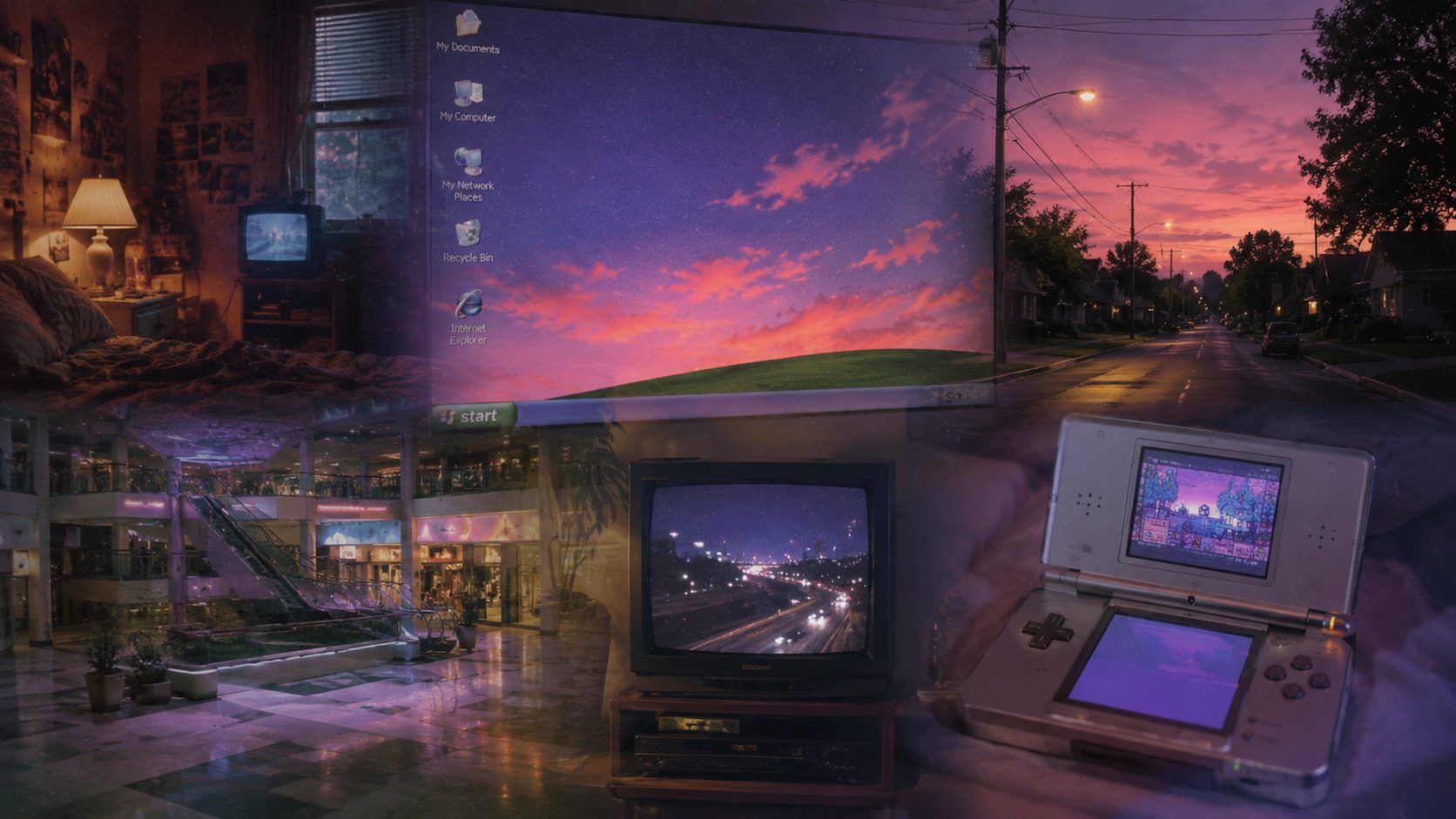
Nostalgia aesthetics are everywhere online.
From blurry VHS footage to old Windows XP screens and empty shopping malls, certain images create a strange emotional reaction that feels warm, calm, and familiar.
Interestingly, people often feel nostalgic even for eras they never personally experienced.
So what exactly is a nostalgia aesthetic?
What Is a Nostalgia Aesthetic?
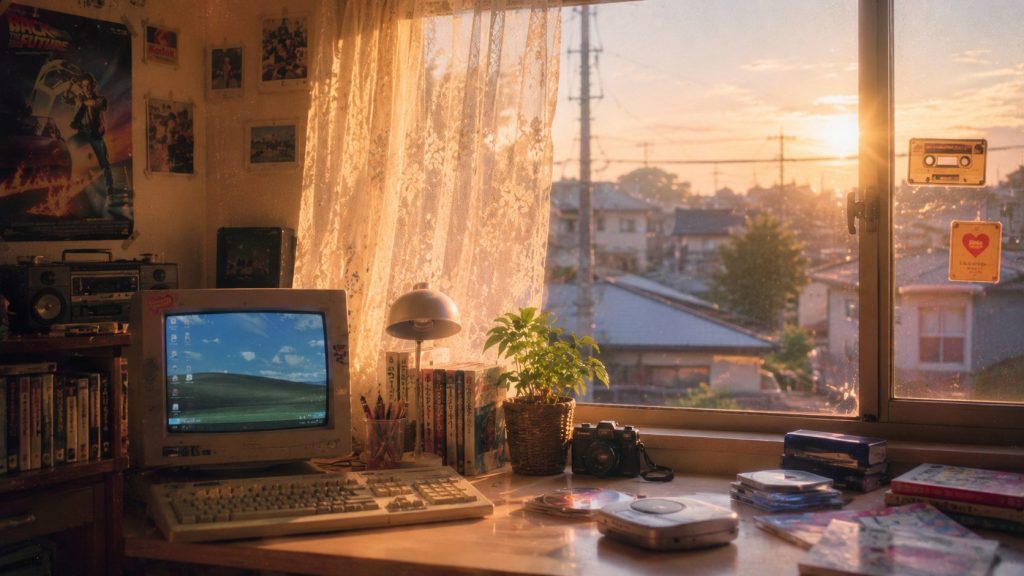
A nostalgia aesthetic is a visual style designed to recreate the emotional feeling of remembering.
It is less about historical accuracy and more about emotional atmosphere.
Common nostalgia aesthetics often include:
- faded colors
- film grain or VHS effects
- retro technology
- old internet design
- quiet suburban spaces
- low-resolution photography
These visual elements create emotional distance from the present, making images feel softer and psychologically safer.
Why Do Nostalgia Aesthetics Feel Comforting?
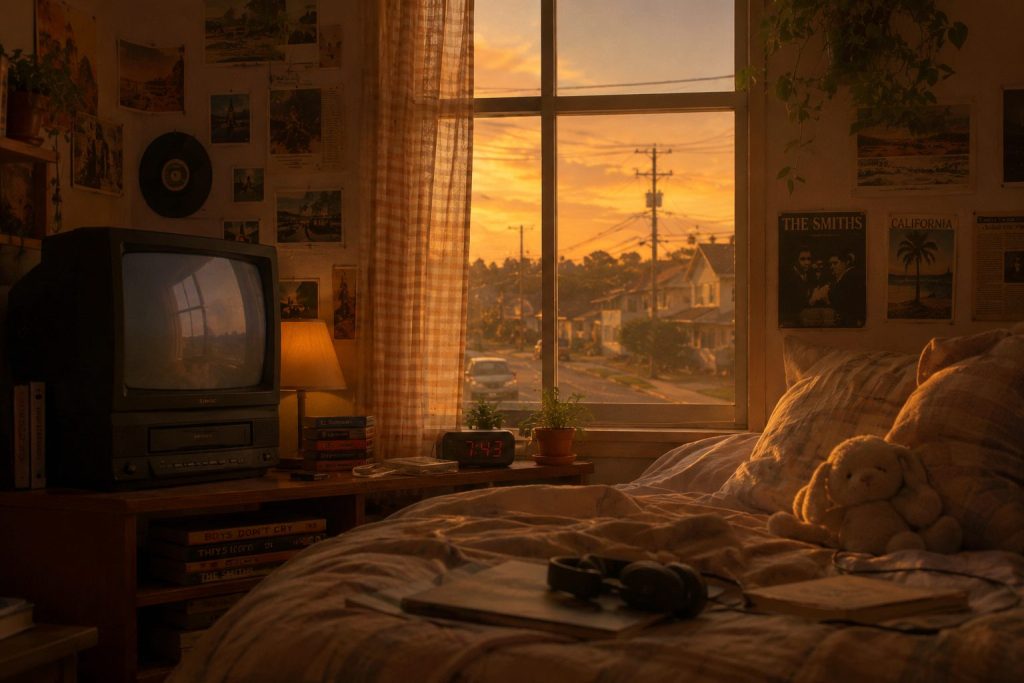
One reason is that nostalgia reduces mental pressure.
Modern online spaces move fast. Social media, notifications, and constant updates can feel overwhelming.
Nostalgia aesthetics create the opposite feeling:
- slower environments
- softer visuals
- familiar spaces
- less sensory intensity
This can make people feel calm and emotionally grounded.
There is also a psychological effect behind it. The past often feels emotionally “complete.” Old memories — or even imagined memories — feel distant from current stress and uncertainty.
That emotional distance creates comfort.
Why People Feel Nostalgic for Times They Never Lived Through
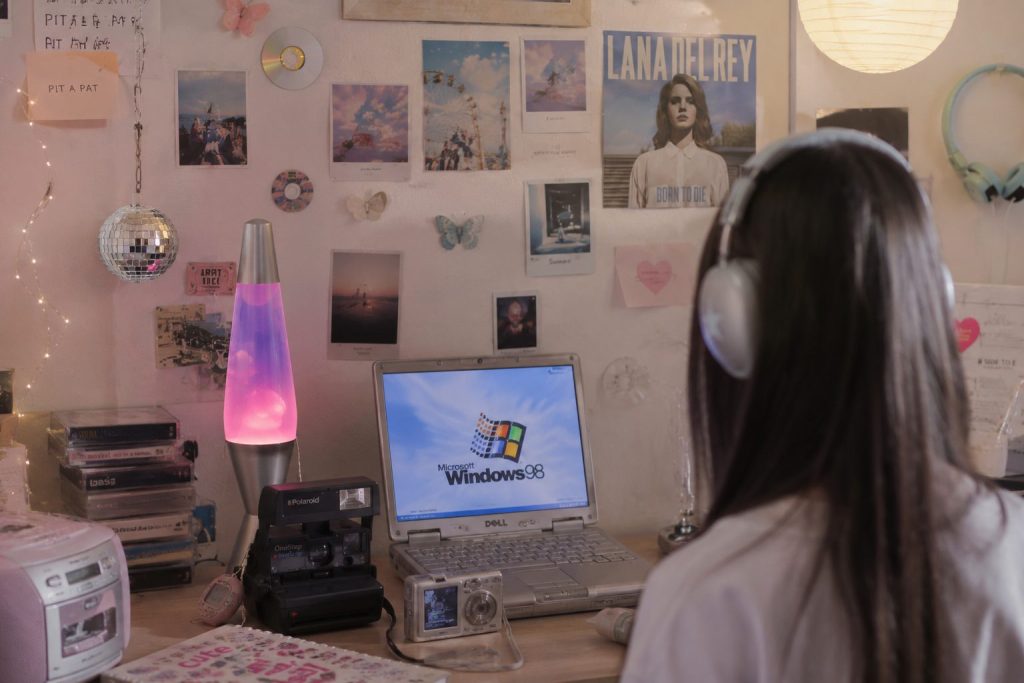
This is extremely common online.
Many people feel emotionally attached to:
- VHS camcorder footage
- early 2000s internet design
- old PlayStation 2 graphics
- CRT televisions
- empty malls
even if they never experienced those things firsthand.
That happens because nostalgia aesthetics rely on collective emotional familiarity rather than personal memory.
Over time, internet culture turns certain images into shared emotional symbols.
Common Examples of Nostalgia Aesthetics
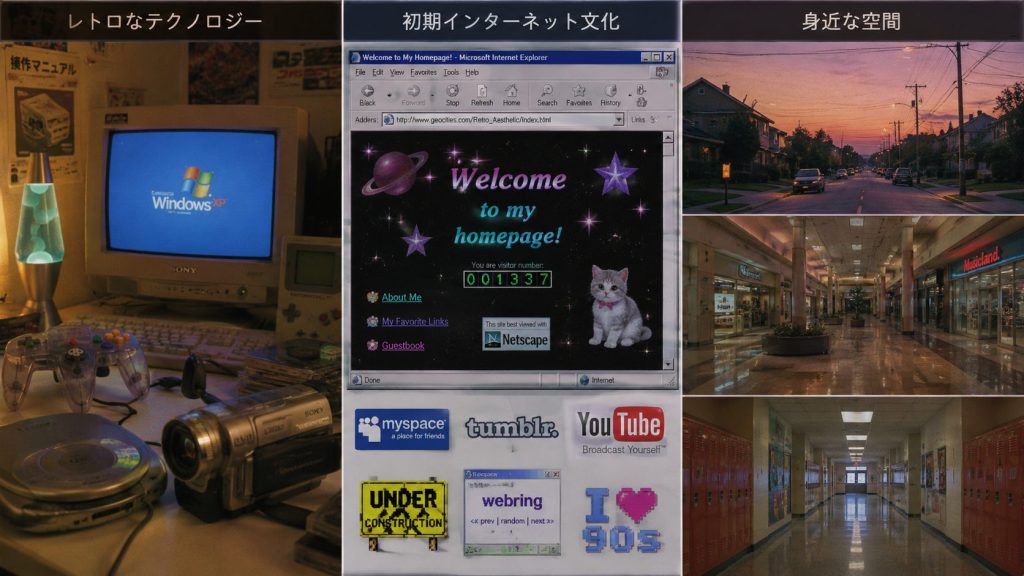
Popular nostalgia aesthetic imagery includes:
Retro Technology
- Windows XP
- flip phones
- iPods
- CRT TVs
- Nintendo DS menus
Early Internet Culture
- old YouTube layouts
- pixel graphics
- Flash-era websites
- Tumblr aesthetics
Familiar Everyday Spaces
- suburban streets at sunset
- school hallways
- shopping malls
- arcades
- old bedrooms
These environments feel emotionally recognizable because they resemble ordinary memories shared across many people.
Nostalgia Aesthetic vs Liminal Spaces
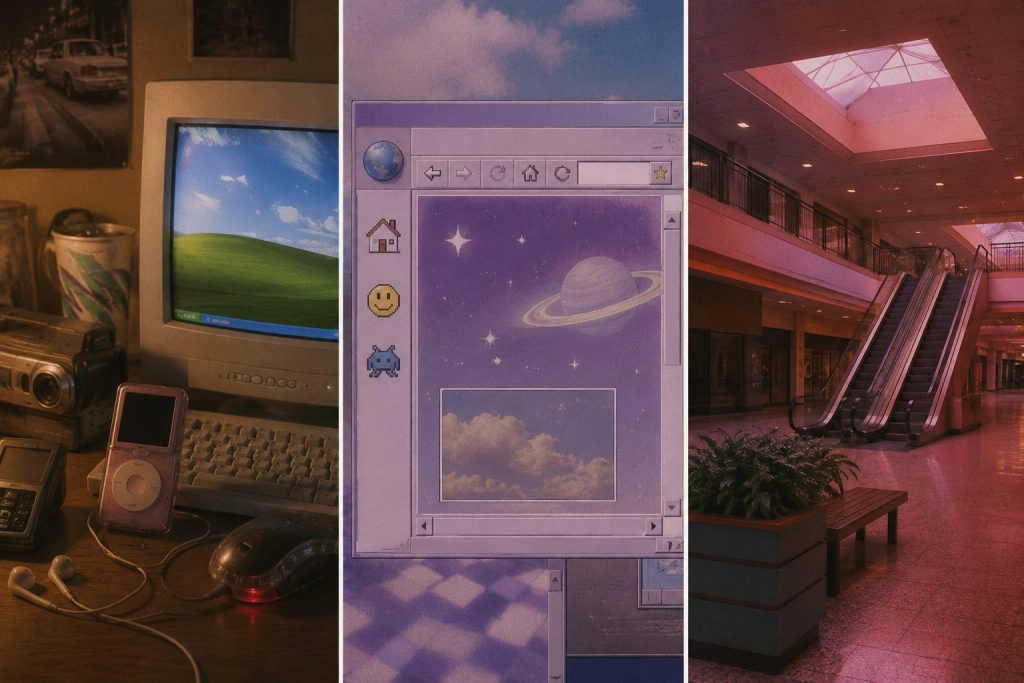
People often confuse nostalgia aesthetics with liminal spaces, but they create different emotions.
Nostalgia aesthetics feel:
- warm
- familiar
- reflective
- emotionally safe
Liminal spaces feel:
- empty
- unsettling
- surreal
- psychologically uncertain
Both rely heavily on atmosphere, but nostalgia aesthetics are usually more comforting.
Why Nostalgia Aesthetics Became So Popular Online
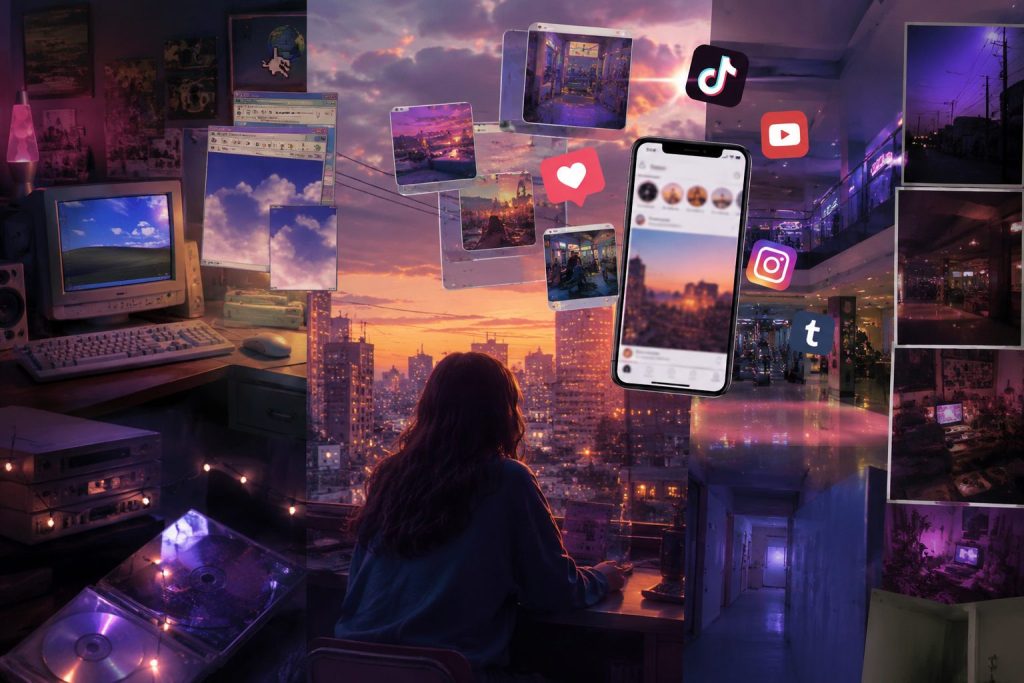
Internet culture changes extremely quickly.
Platforms disappear. Trends move fast. Digital spaces constantly evolve.
Because of this, nostalgia aesthetics give people a sense of emotional stability.
Old technology and retro visuals feel slower, simpler, and more predictable than modern online life.
For many people, nostalgia aesthetics are not just visual trends — they are emotional escape spaces.
In Short
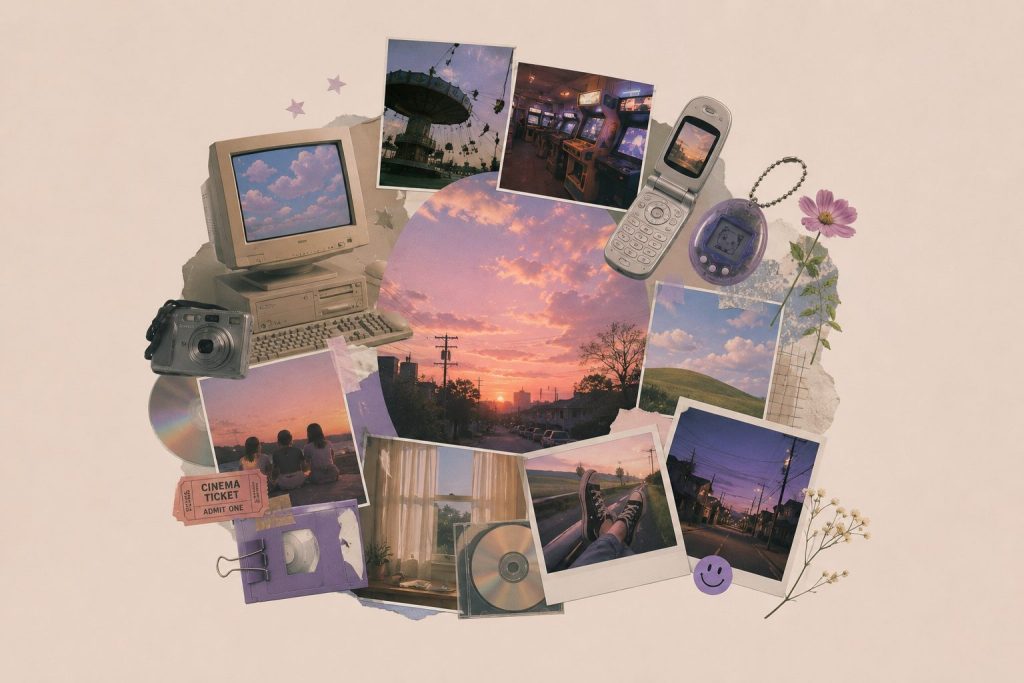
A nostalgia aesthetic is a visual style that recreates the emotional feeling of memory.
It works through:
- familiar imagery
- soft visual textures
- emotional distance
- retro environments
- atmosphere-focused design
Its popularity reflects a larger cultural desire for comfort, familiarity, and emotional stability in fast-moving digital environments.


Comment